Investment Approach
Investments in the Russian stock market have gained unprecedented popularity in the last five years or so. The influx of clients is breaking all records. In this article, I will describe my approach to investing.
Index Investing
I assume the popularity of investing is linked to the growth of the Moscow Exchange index IMOEX and short corrections since 2009. At different times, various trading methods dominated over others. Between 2011 and 2014, scalping and speculation in general were extremely popular, at a time when investments were less promising due to low volatility.
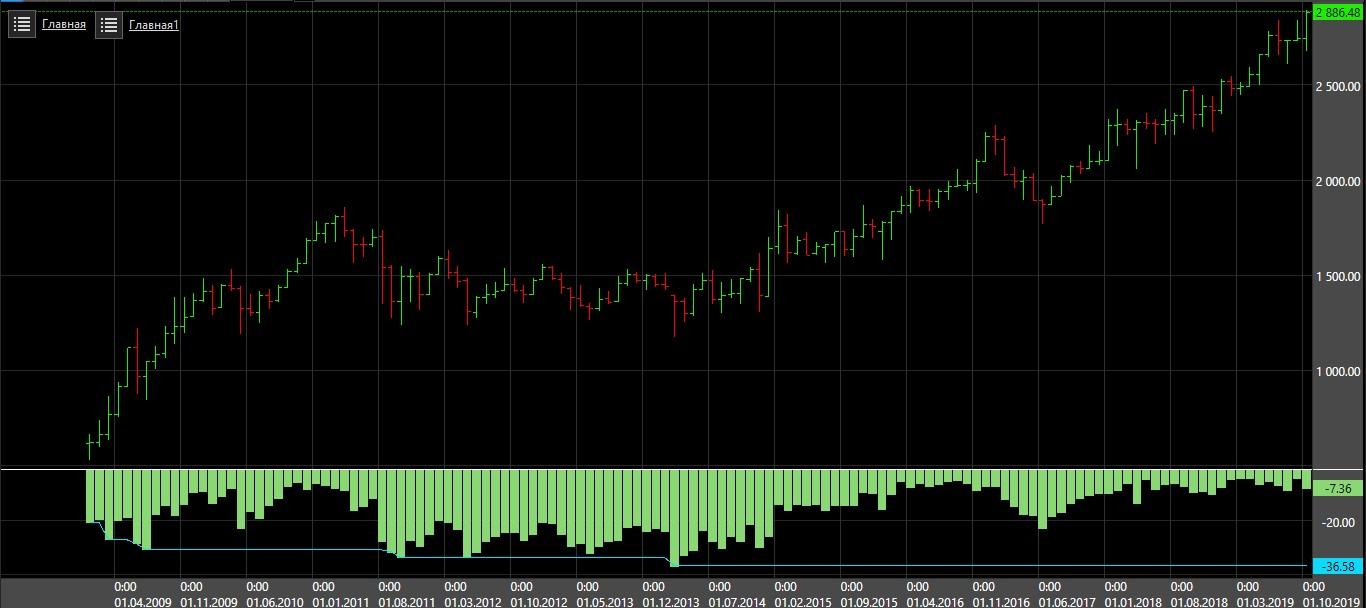
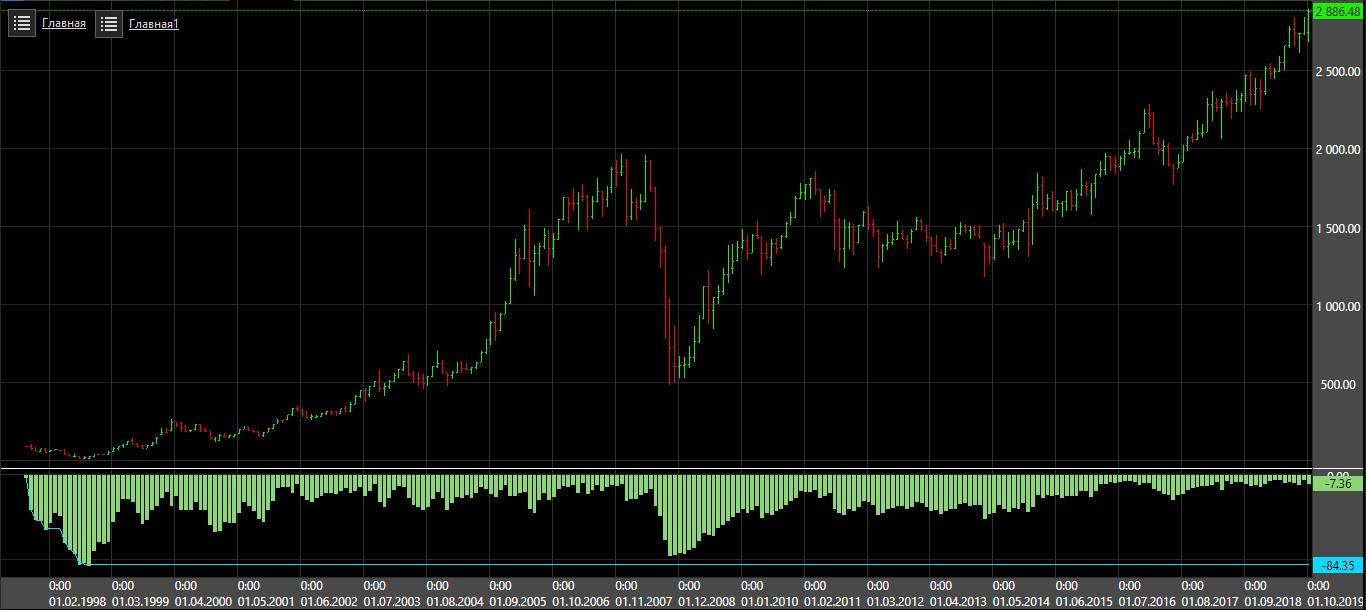
The compound annual growth rate (CAGR) of the IMOEX index over 22 years from 10.1997 to 10.2019 is 16.5% excluding dividends. Unfortunately, I was unable to find total return quotes for MCFTR over such a long period, nor for RGBITR (total return government bond index), so I used the municipal bond index RUMBITR as a benchmark. Its CAGR over 14 years from 10.2006 to 10.2019 is 7.55%, with a maximum drawdown of 22.5%.
It would seem everything is wonderful — by doing index investing, you can earn more than inflation plus the interest rate. But there is a catch: the drawdown and its duration. In 2008 and 1998, the drawdown from historical highs reached over 80%.
Active Portfolio Management
When developing medium-term investment strategies, the first thing to pay attention to is drawdown. If the drawdown is smaller than the benchmark, a slight lag in returns can be overlooked. Index investing is simple and reliable, but not optimal. Mostly because of the drawdown. Reliability, aside from simplicity, lies in its limitations. The investor must replicate the composition of the index. I am confident that a portfolio assembled by intuition will underperform the index.
Drawdown can be avoided by changing the trading method. More active portfolio management — sector rotation, momentum, value investing with a systematic approach — will reduce drawdown. I trade medium-term trend strategies for stocks, with an average position holding period of 20 days. I experimented a lot with different approaches but unfortunately couldn't achieve acceptable results. Among sector rotation strategies, an analogue of the Western SPY/TLT strategy for the Russian market — USDRUB/RUMBITR — shows acceptable results, as these are perhaps the only assets with negative correlation and high volatility. I assume this is related to the high share of non-residents who buy dollars to withdraw funds when selling bonds.
As you can see, the approach to investing is shaped by your goals and risk tolerance. The only thing an investor or trader can control is risk. The method should be built around that. I like a quote from the book "The Black Swan" by Nassim Taleb — risk cannot be measured like a table with a tape measure; risk can only be predicted.