A Guide to Fediverse
Original post on TJournal
I'm sure many of you have at least once been interested in free decentralized social networks, or looked for a replacement for popular social networks. I think many will be interested to learn about the Fediverse and how it works.
Fediverse
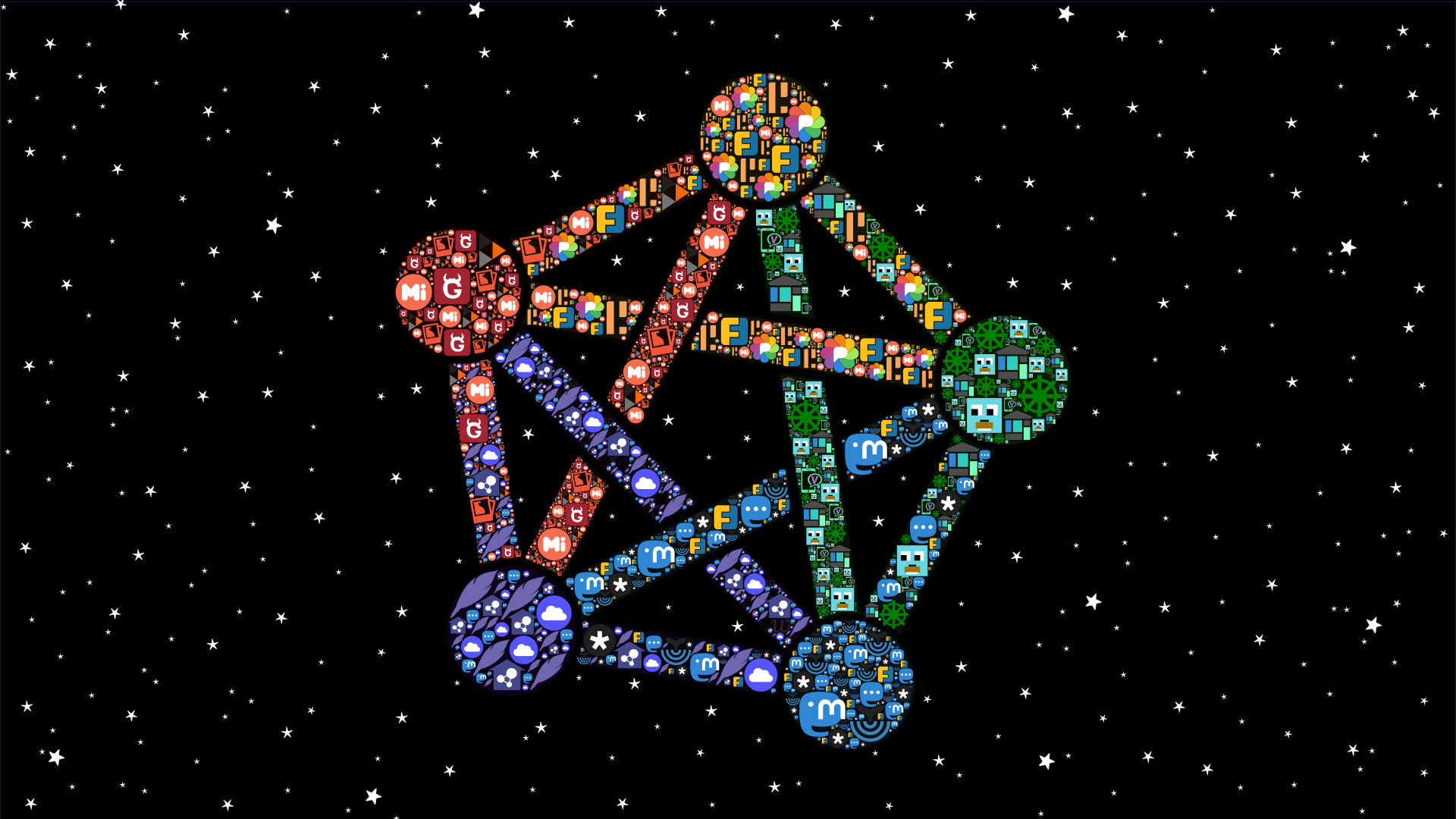
Fediverse is a federated, distributed social network unified by the ActivityPub protocol. In other words, it is a collection of various services — whether video hosting, blogs, microblogs, social platforms, streaming platforms, photo sharing, and much more — running on separate servers and forming a single network.
It's like email — regardless of which server your email is registered on, you can exchange content with everyone else thanks to a common protocol.
The ActivityPub protocol is standardized by the World Wide Web Consortium (W3C) and is open, just as the server software of all Fediverse services is distributed under a free license.
Next, I'd like to focus on the most popular services that can replace Facebook, Instagram, YouTube, Twitter, and Spotify, and support ActivityPub. However, they are far from the only ones. Remember, any enthusiast can study the protocol and implement it in their own development.
Mastodon
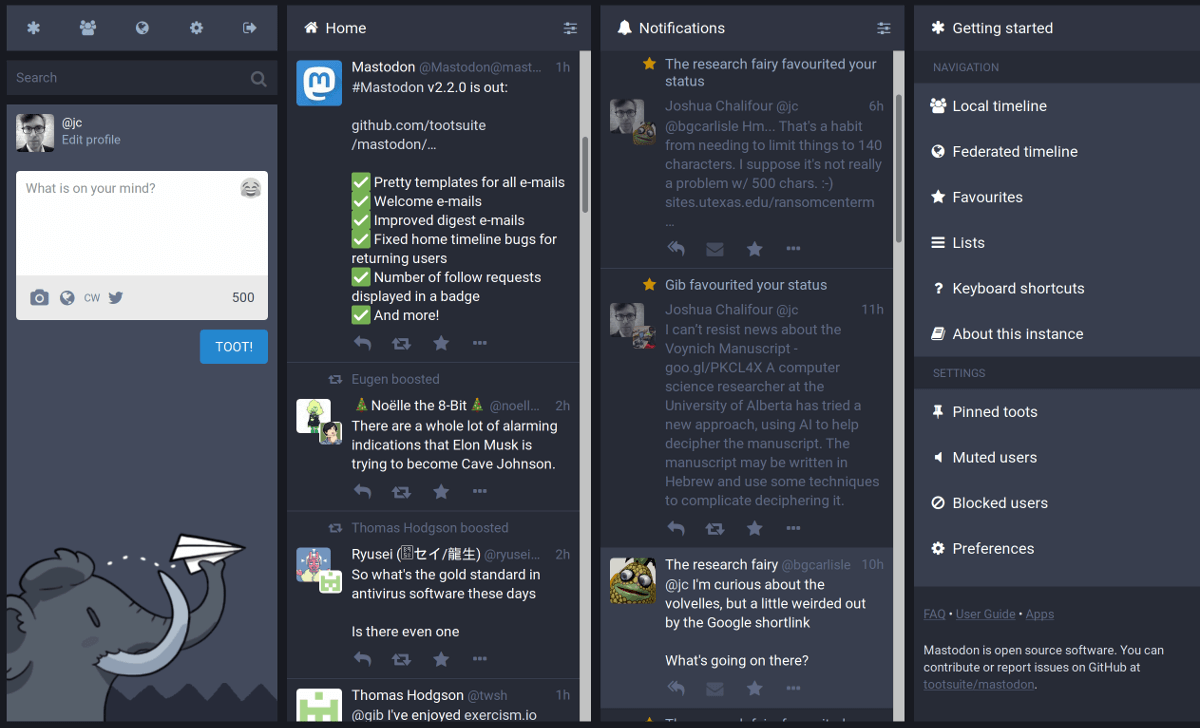
A microblogging service, the most visited project in the Fediverse. At the time of writing, Mastodon has 2.8 million registered accounts, 981k active users, and 3,437 running nodes.
An excellent alternative to Twitter. Here you can write messages (usually up to 500 characters, but each node may have its own limits), publish photos/videos/GIFs, repost, reply to posts, and like. Mastodon has a pleasant TweetDeck-style interface and flexible privacy settings. And of course, no advertising, tracking, algorithmic feeds, or censorship.
Each node has its own terms of service, so read them carefully before registering — unlike commercial social networks, they are short here. Alternatively, anyone can run their own Mastodon node and communicate with the Fediverse.
For those who like this microblogging format, you can also check out Pleroma (written in Elixir and capable of running on low-power servers, even on popular single-board computers like the Raspberry Pi) and Misskey.
PeerTube
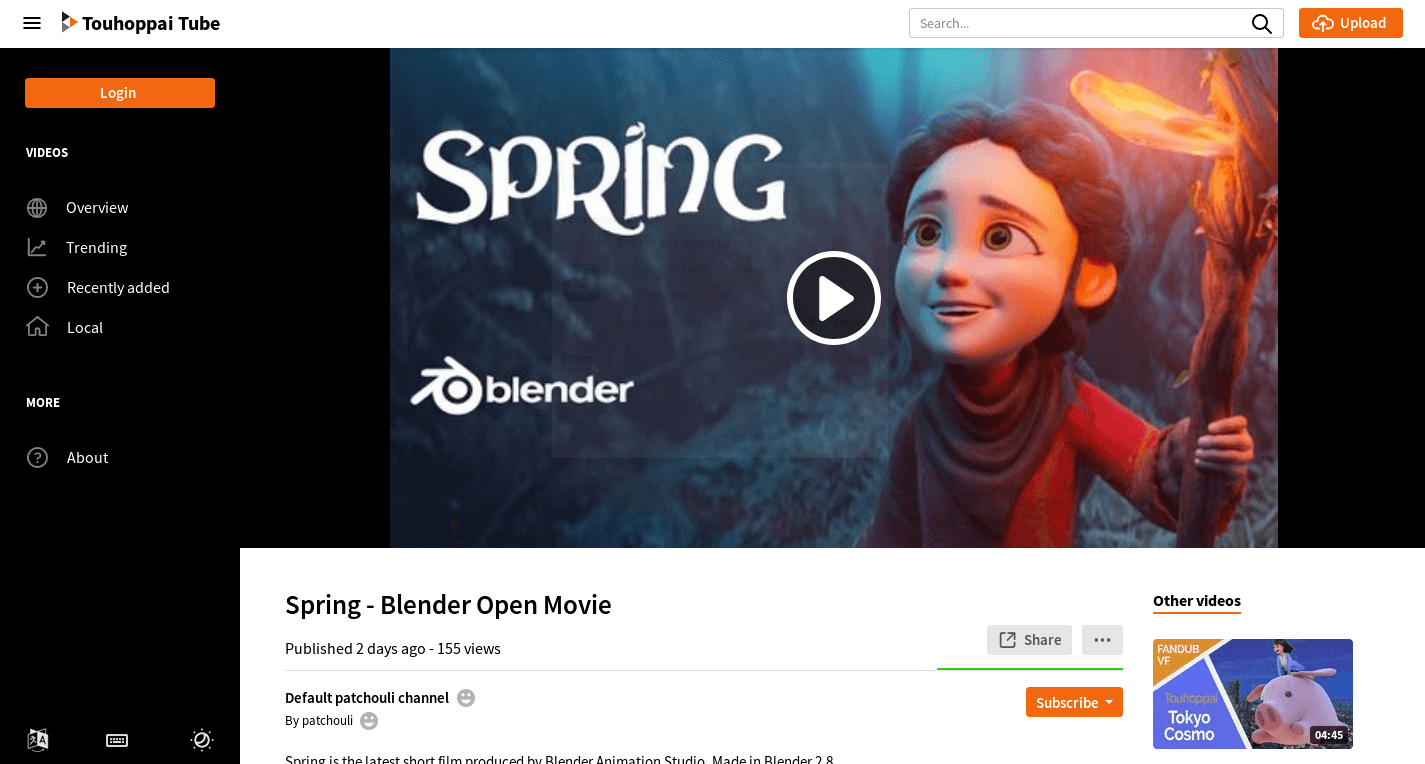
A P2P video platform functioning on the basis of WebTorrent technology. This method allows distributing the load between the server and clients, as users send each other fragments of the video while watching. If nobody is watching a video, the server provides it via the WebSeed protocol.
Additionally, each individual PeerTube node can subscribe to another node and redistribute their videos, forming a distributed network not only of clients but also of servers. This allows hosting large amounts of content without requiring infrastructure equivalent to that of giants like YouTube.
One of the drawbacks of a decentralized system is search, and this applies not only to PeerTube but to the entire Fediverse.
Development is supported by the French non-profit organization Framasoft, which solved the search problem for PeerTube by creating SepiaSearch — a service that allows searching across all nodes it knows about.
At the end of 2020, the Debian project donated $10,000 to Framasoft to reach the fourth goal of their crowdfunding campaign, and in early 2021, PeerTube v3 was released with live streaming support.
The project gained particular media attention in 2018 after YouTube temporarily blocked the Blender channel (free software for 3D graphics creation). The Blender team didn't hesitate and launched their own PeerTube node.
Funkwhale
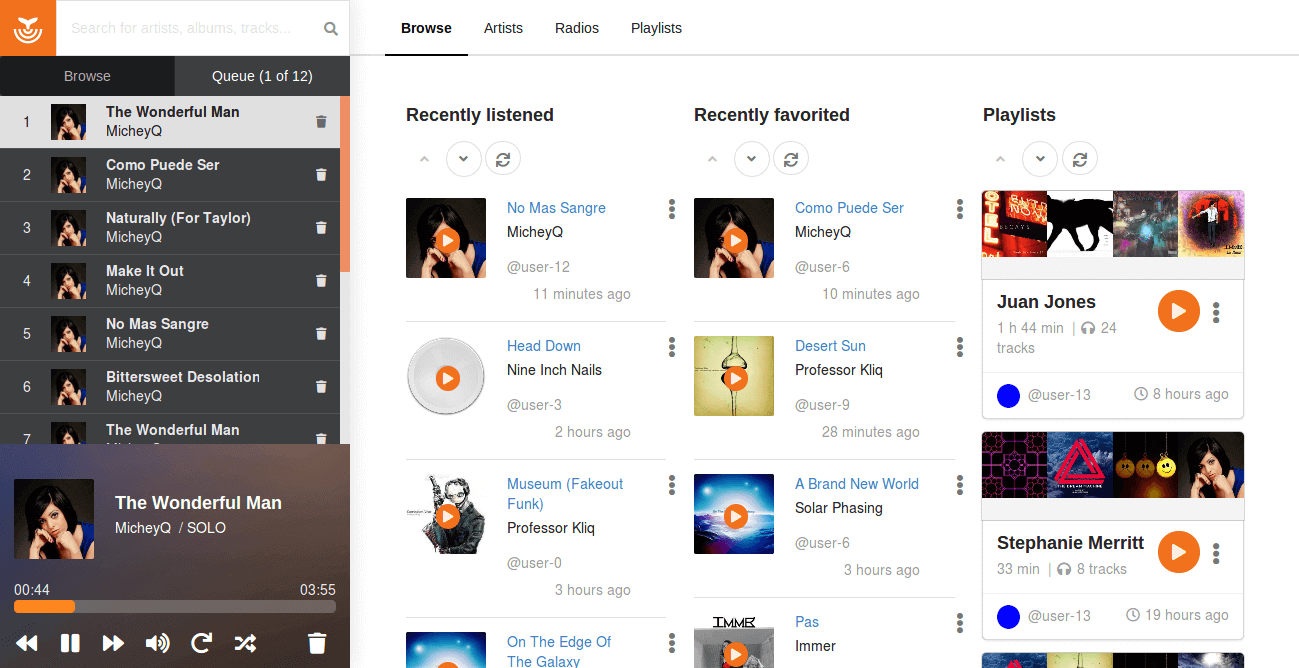
A platform that allows you to listen to and share audio, playlists, podcasts, and artists. Each user can create their own library, upload audio to it, and share it with other users (and nodes), regardless of whether they are on the same node or not. This means a user can listen to audio from all nodes connected to them, thanks to a caching system.
Funkwhale, like other Fediverse services, consists of many nodes, and all of them can exchange content with each other.
Funkwhale supports a wide range of apps via the Subsonic protocol for iOS, Android, Linux, and Windows. You can listen to your favorite music online or offline on a smartphone, media center, PC, or any type of device.
Pixelfed

A suitable alternative to Instagram. It looks almost the same to make the transition easier for people and has the same aesthetic. However, some features are still under development, but PixelFed shows promising prospects.
Key differences: no ads; privacy-focused; chronological feed. One of the most common problems with Instagram was sorting the feed not chronologically but using an algorithm. This affected the visibility of relevant posts, as the algorithm uses its own method of prioritization.
And yes, PixelFed has stories.
Friendica
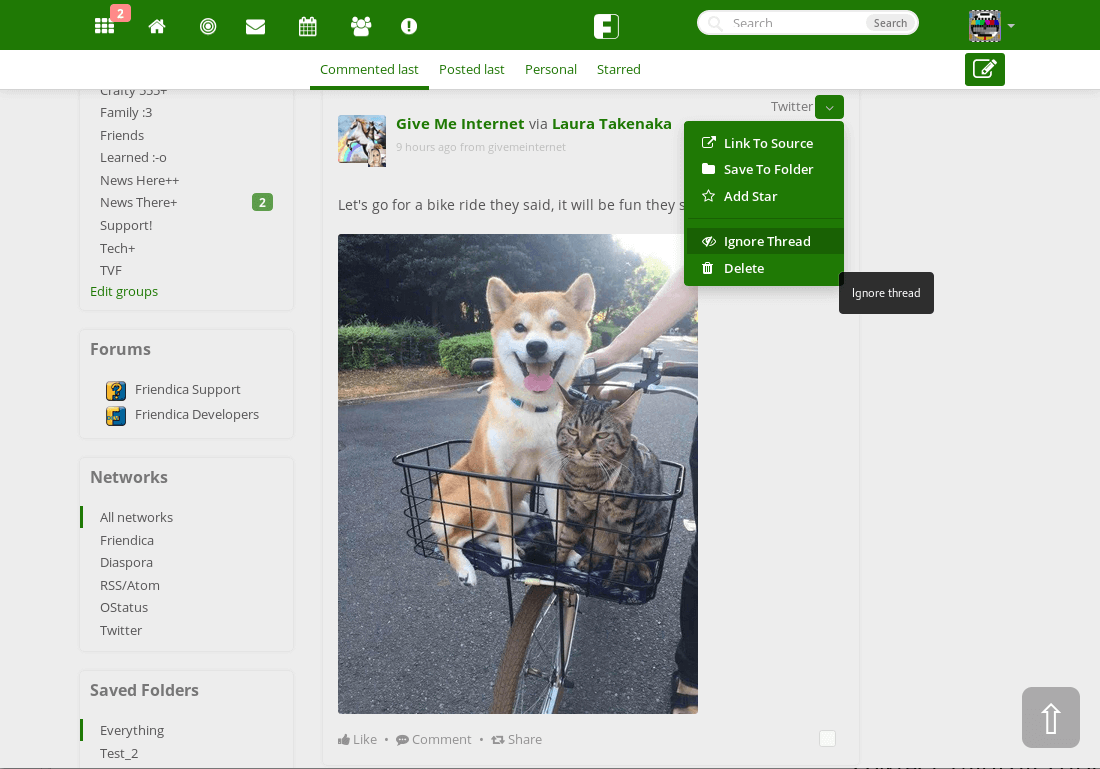
If you don't like the microblogging format and prefer something like Facebook or VK, you should try Friendica.
One of the most flexibly customizable social platforms — you can get lost in the profile settings. It's easier to say what it doesn't have, as the functionality is very broad.
To start, the project evolves in step with another project called Hubzilla and supports not only the ActivityPub protocol but also other less popular ones like Diaspora and OStatus. The project was started by Mike Macgirvin, a developer who previously worked on the Netscape Navigator project.
Friendica users can integrate contacts from Diaspora, Twitter, Facebook, Email, and other services into their own RSS feeds and social contacts. Where possible, communication is bidirectional. Additionally, there is cross-posting capability to WordPress, Livejournal, and Tumblr.
A distinctive feature of Friendica compared to other Fediverse projects is the ability to form "contact groups." That is, you can create a pool of contacts and post messages visible only to certain groups.
Friendica has been embraced by European users. It has been actively covered in the media, and government nodes are even being organized for various departments.
WriteFreely
If you want to start a full-fledged blog in the Fediverse, consider WriteFreely (I know, the naming in Fediverse is a bit of a mess).
This is a decentralized self-hosting engine for creating blogs, focused on privacy and minimalism. It is developed by the write.as team. The engine uses the Go language, making it lightweight on resources.
What sets it apart from other popular engines, besides ActivityPub support, is its minimalism. WriteFreely has no notifications, likes, plugins, or widgets. You get a distraction-free environment for writing, and readers can enjoy "clean" reading. Authors can create multiple blogs from one account for different pseudonyms or purposes. And of course, Markdown — its simple syntax is very appealing. Recent updates added support for the Gopher protocol and a WYSIWYG editor for users unfamiliar with the Markdown markup language.
In 2019, the Linux kernel developers started their own blog on the WriteFreely platform.
If you're put off by the lack of elements like likes, reposts, and comments, I recommend checking out another popular blog platform that supports ActivityPub, called Plume.
Conclusion
If I managed to spark anyone's interest, try starting with Mastodon. You can choose a node for registration at joinmastodon. In the Russian-speaking Fediverse, there are groups for communication. For those who want to learn more about the history of the Fediverse, I recommend listening to the podcast "The History of the Fediverse: A Story of a Free Social Network". In short, join and welcome to the Internet!